 EN
EN
 AR
AR
 BG
BG
 HR
HR
 CS
CS
 DA
DA
 NL
NL
 FI
FI
 FR
FR
 DE
DE
 EL
EL
 HI
HI
 IT
IT
 JA
JA
 KO
KO
 PL
PL
 PT
PT
 RO
RO
 RU
RU
 ES
ES
 TL
TL
 ID
ID
 SR
SR
 SK
SK
 SL
SL
 VI
VI
 MT
MT
 TH
TH
 TR
TR
 FA
FA
 AF
AF
 MS
MS
 GA
GA
 HY
HY
 BN
BN
 MN
MN
 SO
SO
 KK
KK
 MY
MY
 UZ
UZ

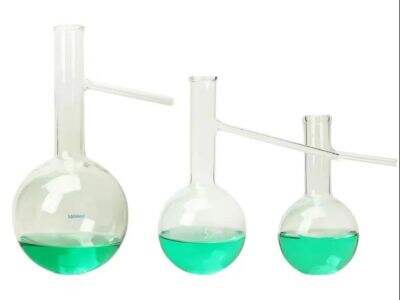
You might see all kinds of glass tools when you enter a science lab. These tools allow scientists to conduct experiments and make observations. In this article, we’ll take a closer look at some of the most common pieces of lab glassware and their roles in science. Lab Equipment We have one minute to explore the exciting world of lab equipment.
Common Laboratory Glassware: An Overview
We also use various designs and casts of lab glassware. Each kind plays a unique role in scientific experiments. Various glassware is typically utilized in a laboratory like beakers, test tubes, graduated cylinders, and Bunsen burners, pipettes, burettes, and stir bars, and Erlenmeyer flasks. These instruments are used to measure liquids, stir substances, heat materials, and conduct experiments accurately and safely.
No Lab Work Without Graduated Cylinders and Beakers
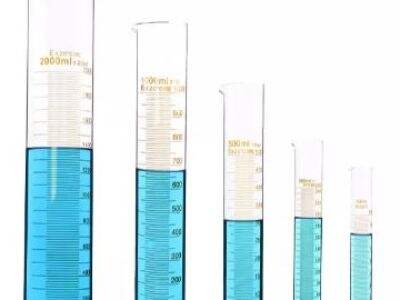
Two fundamental pieces of equipment found in any lab are graduated cylinders and beakers. Graduated cylinders are thin glass tubes. They are marked with measurements to help measure the amount of liquid accurately. Scientists use them to pour and measure precise volumes of liquid in experiments. Beakers have straight sides with a very wide opening which makes them very useful to mix, heat, and store liquids. To be able to perform experiments and obtain the correct measurements, both graduated cylinders and beakers are incredibly essential.
Pipettes and Burettes: A Guide to Their Role in Experiments
(These are glass tubes that allow scientists to transfer precise amounts of liquid from one place to another during experiments as well.) Pipettes are small, narrow tubes with a bulb end that creates suction to draw in liquid. Burettes are longer tubes with a stopcock at the bottom that controls the flow of liquid. These structures are essential for precise measurements and for mixing liquids in science. Lab experiments require accuracy: Pipettes and burettes help scientists achieve just that.
Test Tubes and Bunsen Burners: The Icons of Chemistry
Max Facts: Fact: A test tube is a long, cylindrical glass container or tube that is used to hold (varying amounts of) liquid or solids for experimentation purposes. Also, they can be fabricated in different sizes and can survive to high temperature, make them awesome for every kind of scientific work. Bunsen burners are gas burners which heat things in test tubes or beakers during experiments. They provide a constant and adjustable flame for gentle heating, and are an indispensable feature of many chemistry experiments in the laboratory.
How Stirring Rods and Erlenmeyer Flasks are Utilized in Science
There are two other types of glassware that are common in scientific research, stirring rods and Erlenmeyer flasks. Stirring rods are thin, long glass sticks used to mix liquids and solids in beakers or test tubes. They aid in uniform dissolution and ensure adequate mixing during experiments. Erlenmeyer flasks are cone-shaped vessels with a narrow neck. They are also perfect for the mixing, heating and storing of liquids. They are also known as a rather popular set of apparatus used for carrying out chemistry experiments, and the crucial part of conducting reactions hence they do it safely and efficiently.
Laboratory glassware is very key in scientific research. It provides scientists with the tools they require to conduct experiments properly and safely. These kinds of glassware have a specific function, whether it be a measuring glass, a mixing glass, an oven glass, or a laboratory glass. Knowing the functions and uses of common laboratory glassware enables scientists to perform experiments accurately and generate accurate results. So the next time you go to a lab, pay attention to the various types of glassware (or other types of materials, if any) and how remarkable they are for educating you about science. Happy Exploring Lab Glassware!